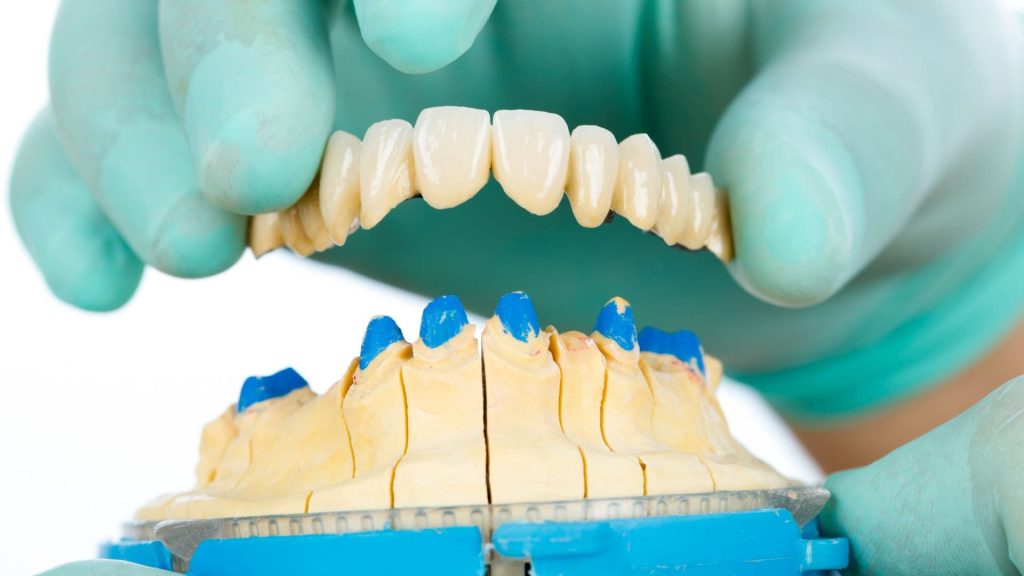
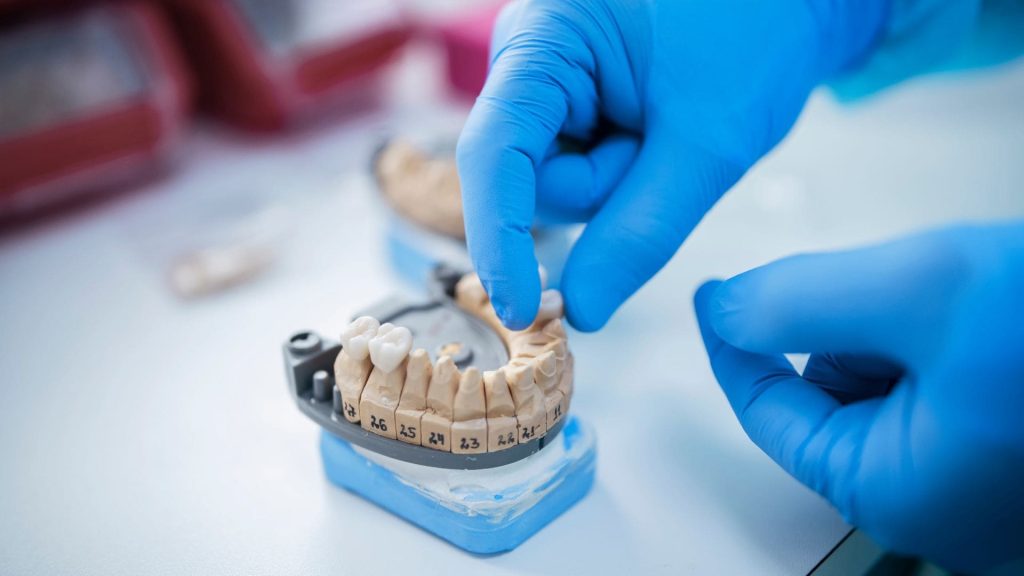
The dental bridge, also called a fixed bridge, is a fixed prosthesis used to replace one or more missing teeth. It is fixed to adjacent teeth called abutment teeth, or on dental implants, depending on the case.
Unlike removable prostheses, the bridge is permanently cemented and offers an excellent compromise between function, aesthetics, and stability. It allows for:
The loss of a tooth is not just an aesthetic problem. It can lead to:
An occlusal imbalance
Premature wear of remaining teeth
Difficulties eating or speaking
Bone loss in the jaw
The bridge is a reliable, quick, and economical solution for restoring one or more missing teeth, without systematically resorting to implants.
Several materials are available, each with its advantages:
This is the most common type. It is fixed to two abutment teeth located on either side of the missing tooth. These teeth must be prepared, or even root canal treated if necessary. The conventional bridge is strong, aesthetic, and suitable for most cases.
Ideal for replacing a single tooth, the bonded bridge relies on the inner surfaces of adjacent teeth using a special cement, without preparing or root canal treating them. It is more conservative than the conventional bridge, but less durable in the long term.
When adjacent teeth are missing or too fragile to serve as abutments, a dental implant is placed on each side of the edentulous area, onto which the bridge is fixed. This solution offers excellent stability and preserves natural teeth.
When several teeth are missing, or even an entire arch, it is possible to opt for an extended bridge or even a full arch bridge. It can be placed on natural teeth or on several implants. It is a more economical alternative than a series of single implants.
The treatment is carried out in several steps, all painless thanks to local anesthesia:
Natural aesthetics: modern materials perfectly imitating natural teeth
Optimal comfort: sensation similar to a natural tooth
Restored chewing function
Quick treatment: generally 2 to 3 appointments are sufficient
Affordable price compared to multiple implants
To ensure the durability of your bridge, good oral hygiene is essential:
Brush your teeth 2 to 3 times a day
Use special bridge floss or interdental brushes
Undergo a professional scaling every 6 to 12 months
Regular follow-up at the practice allows for checking the condition of the bridge and preventing any complications.
Regain comfort, aesthetics, and self-confidence with a dental bridge.
Contact Dr Laurent SERS’ practice in Cannes for a personalized consultation.
📍 Dental Practice 54 – 54 Rue d’Antibes, 06400 Cannes
📞 +33 4 93 69 48 01